Showing posts with label Your Baby is so Scary. Show all posts

Sunday, May 27, 2012

Daidokoro Adventures: Bread

Other than the occasional banana bread, I've never made bread. But I saw a mini bread maker (about half the size of a normal bread maker, roughly the size of a toaster oven) in a secondhand store, and the idea kept rattling around in my head.

On the "Get it, Get it Now!" side, it was a great deal and when I looked it up on Amazon, it has overwhelmingly 4 and 5-star reviews. It makes something like 10 different kinds of bread (including pizza dough!), plus mochi and jam.

On the other hand, nothing related to it exists in English. The menu options are in Japanese, the manual is in Japanese, and the recipes included are in Japanese. If you type "Siroca SHB-212" into a search engine*, you will only get Japanese results.
*Mentioning the make and model isn't meant to be so much an advertisement as help to any other English speakers out there that have the same problem I did.

In spite of reading a very limited amount of Japanese, the lure of fresh-baked bread was too strong to resist.
How could I say no to this kind of possibility?
(Picture from here.)


As far as appliances go, it's kind of cute.


Okay, time to see if I can figure out enough of the manual to make it work. 

I did manage to translate the table of contents, that's a start. It took at least an hour and heavy use of my Japanese/English dictionary app and Google Translate, but it got done.

Crooked assisted. He is part of the reason it took so long.
I call this "being helpful like a Crooked."

I'm not spending the rest of my weekend slogging through the rest of it. Let's see how much I can figure out without looking up each kanji I don't know.

Okay, parts of the machine: display menu, lid, window, bread case, where the blade/mixer goes, options on the front...not so bad. I can read some of the menu settings and I can tell which button goes to which area of the display panel.

Things I'll need...I don't have a digital scale, but I have the Internet.

Then there's some sort of flow chart to illustrate how bread baking works. I don't really get it, but...wait a second. Are those bread illustrations smiling?

Yes, yes they are. This manual includes adorable-ness!

Wet ingredients (or at least water), then dry ingredients. Then yeast on top. To remove the pan, twist before pulling out.
Hooray for pictures!

Press the menu button to choose the setting. I'm just going for #1, plain old regular bread. Gotta start off easy, considering I have no idea what I'm doing and I'm doing it in a language I don't speak or read very well.

The top settings are for 1 loaf, a 1.5-loaf-sized loaf, or a double-sized loaf. Again, just going with one, since this is the trial run.

The bottom settings are for crust (light, medium, or crispy), I left it at the default medium.

When ready, press Start! Got it.

And then a block of text happens. I'm not sure what this is about and I hope my lack of motivation to translate it doesn't come back to bite me later.

Um...then...press stop? I'll have to come back to this.
(Edit: the headline says to press the Stop button for 2 seconds when the buzzer indicates it's ready.)

To remove bread, take out the case with hand protection and shake it until it comes out. Cool on a cooking rack, carefully take the blade out, too. And some warning about not hurting myself, presumably.

Unplug when done. Easy enough.

Directions read, let's do this thing! All right, manual-I-can-barely read, give me a recipe for a single loaf size, please!
Right, they measure dry ingredients in grams. Dangit.
The recipe translates to:
250g flour (2 cups)
180mL water
15g butter (just over a tablespoon)
18g sugar (One and four-fifths of a tablespoon? That seems like a strange amount.)
6g skim milk (The parenthetical note indicates 2 teaspoons. Why that isn't the main measurement, I have no idea.)
4g salt (Four fifths of a teaspoon)
2.7g dry yeast (1 weak teaspoon? I'm not sure what that means.)

There are more specific directions, presumably about mixing, but I can't read them. So wet ingredients first then dry.

Ready, set, go!

Water, milk, butter. Not so impressive.

Flour, salt, sugar, yeast. Still not that impressive.

Okay, here goes nothing.


Note the distinct lack of blowing up. That's a good sign!

After a couple minutes, it started to look like dough.

Sometimes it mixed with enthusiasm.


Basically, I put flour, water, butter, salt, sugar, and yeast into a box and pressed a button. Making real bread can't actually be that easy, can it?

3 hours, 50 minutes to go:

3 hours, 20 minutes to go:

 Two hours, it's starting to look like real bread:

An hour and a half, I'm a little concerned:

Half an hour left, it still looks like dough, but it has the right shape:

Done! And it looks pretty good!

It looks really good! Now, does it taste as good as it looks? I'm a little afraid it will taste like baking soda or something (not that there is any baking soda in it).

Surprisingly enough, it tastes like it should. Apparently making bread is just as easy as putting a few basic ingredients together and pressing a button.


(Pardon the smeared makeup and pajamas, I didn't think far enough ahead to put on real clothes or fix my makeup.)

New, previously unconsidered problem: it was so good we ate the whole thing. And then we started a new loaf of rosemary bread. #FirstWorldProblems

Thursday, July 21, 2011

More About the Japanese Language

The Interesting Ones

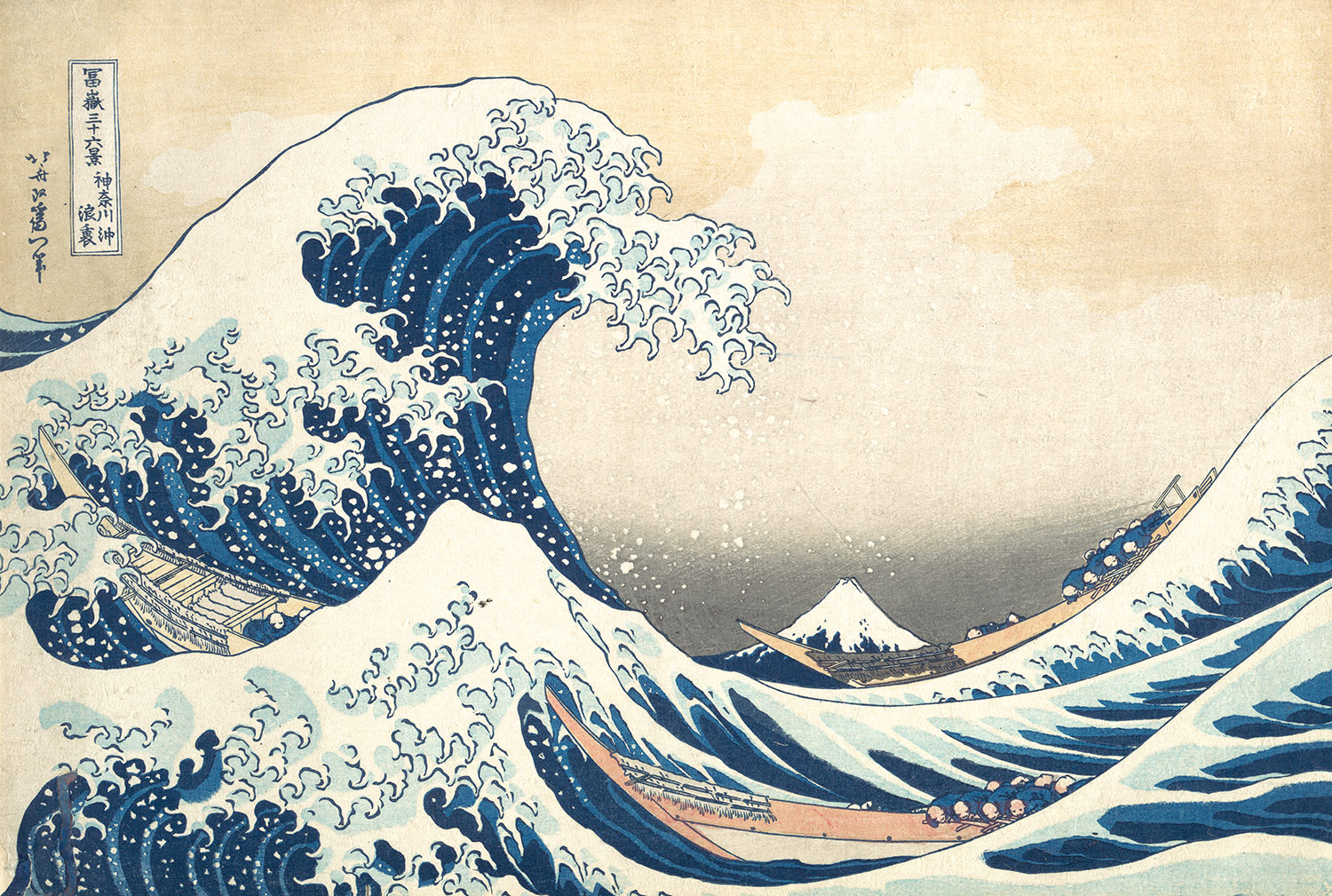
Ukiyo-e is the name of the Japanese woodblock print technique. There are some very famous ukiyo-e prints, one of which is to the right. I recently found out what it means.

uki = float
yo = world
e = picture

This means that the woodblock prints are pictures of things floating on the surface of the world, they are inherently temporary and unpredictable. Deep, no?


The word for baseball is yakyuu.
ya = field or fielding
kyuu = ball

It's literally "field(ing) ball."
Interesting note, baseball clubs in high schools here are apparently very strict. The "mandatory buzz cut, militaristic" variety of strict.


The word for drinking is のみます、nomimasu.
You can also use that word to describe what you do with soup or medicine. One of my fluent friends clarified that nomimasu means not just "drink" but "to consume without chewing."

I have no punchline for that, I just thought it was interesting. (おもしろい、omoshiroi)


To say you like something, you can use the word suki. It literally means "a favorite."

すしが すき です。
Sushi ga suki desu.
I like sushi.

To say you like something very much or love it, you can use daisuki. It literally means "big favorite."

ピザが だいすき です。
Piza ga daisuki desu.
I love pizza. (Pizza is a big favorite!)

That sort of touches on one of the kinds of Engrish I like the most. Not the kind where something is way off the mark and makes no sense (although those can be downright hilarious), but the kind that makes sense and I know exactly what's being said, but I would not think to use that phrasing if I were trying to communicate the same idea. I see this most often on stationary sets or gift bags – places where the actual words don't really matter as long as it's short and cheerful. It's endearing and makes me smile.


The Funny Ones

In the US, there are a few different drinks aimed at replenishing electrolytes and generally quenching thirst. In Japan, you probably won't find Gatorade or Powerade, but there are others.

One is Pocari Sweat.

As it was described to me, Japanese people think, "When you sweat, you drink Pocari."

Americans think, "There is a Mr. Pocari. This is his sweat."

I like the stuff. It has some light flavor, but unlike what Gatorade has become in recent years, it doesn't make me more thirsty when I'm done with it.


Then there's Calpis. It's one of those drinks that is a flavor by itself and also a brand. It's a slightly milky uncarbonated soft drink, which makes it sound less appealing than it really is. You can get different flavors of this beverage and a number of foods (mostly candy) flavored like it.

For sale in some English-speaking countries they changed the name to Calpico.

Why? Because when Japanese people see "Calpis," they think, "Calpis."

English speakers think, "Did you say 'cow piss'? I'm not drinking that!"

I don't enjoy this as much as I enjoy Pocari Sweat, but I do like it. Partly because I enjoy saying it out loud.

It's the same reason I ordered a Nobbly Bobbly from an ice cream truck in the UK once. Some words just amuse me.


Completely Random

I had to buy this note pad. I couldn't not. In big letters it says PANDA PANTS! I'm a sucker for alliteration and the idea of pandas in pants amuses me. But that didn't seal the deal. The clincher was the text at the bottom.

Mama no pantsu wa tottemo ookii yo!
Mama's underpants are very big!

I don't know how they decided upon that particular bit of text or why the small panda is hanging out in the pantsu in question, but I do think it's hilarious.

Sunday, July 3, 2011

I'm Going to Geek Out Over Language for a Bit

Let me start by saying that learning Japanese is one of my favorite things ever. Someday I hope to speak it well enough to communicate with my neighbors that speak no English. In the meantime, my friends are exceptionally patient and helpful in encouraging the practice of and correcting my  (often not-quite-right) grammar and vocabulary.

And if I've made any mistakes here, some of those friends will hopefully correct me and I will edit it quick like a bunny.


Component Parts
Some words sound complicated until I know how they are put together, then the light bulb comes on.

Like  おてあらい、otearai, the polite word for bathroom.  
O is honorific and goes at the beginning of many nouns to show respect,  te is hand, and arai is the root of the word for rinsing. It is literally the place to rinse your hands, and this makes sense because it implies why you would need to do such a thing without coming out and saying it. (Non-direct-ness is one of those notable cultural characteristics.)

ちかてつ、chikatetsu, is the word for the subway.
Chika is underground; tetsu is iron. It literally means "underground iron."

  
くつした、kutsushita, is the word for sock.
Kutsu is shoe, shita is under. It is what you wear under your shoes.


Vowels are Very Important
For those of you unfamiliar with written Japanese, there is a syllabary instead of an alphabet. This means that there are vowels representing the same vowels we use, but the other letters are all the equivalent of a consonant-and-letter combination. "Ka" is the single character か, for example. (For the sake of this post and my sanity, I'm pretending kanji doesn't exist.)

When a vowel sound is elongated, that sound is held for an extra beat. This can be very important for vocabulary. Proper spelling and the ability to speak sense go hand in hand. Adding or subtracting a vowel can change the meaning pretty drastically.

shujin = husband
shuujin = prisoner
Hello, I am Kim and this gentleman is my prisoner. Nice to meet you.
こんにちは、わたしは キムです。こちらは しゅうじん です。はじめまして。

chizu = map
chiizu = cheese
Where are we? Please let me see the cheese.
どこに いますか? わたしに チーズを みせて ください。


Expanding Definitions
Some words are interesting to me because they encompass two or more words in English that have similar meanings if you think about it.

けします、keshimasu, can be used for erasing written marks or turning off electricity. So you can, in a sense, erase the light when you flip the switch.

かきます、kakimasu, can be used for writing or drawing. Those sound like two different ideas unless you consider calligraphy.


The Same But Different
In English we can talk about personality with a few different adjectives. With teachers, for instance, we can imply how strict someone is by saying they are an easy teacher or a tough teacher. In Japanese, they describe personality with amai or karai, sweet or spicy.

I have also heard a friend describe a co-worker as having a spicy tongue, meaning that they were very direct and perhaps not always tactful when they spoke. I had not thought to describe personality with spicy, but it really makes a nice counterbalance to sweet, which I use fairly often.


Progress!
As of the last couple classes, and this is very exciting for me, I can talk about how long it takes to get from one place to another! We are planning a trip to a theme park. I can say, in Japanese, how long the park is open, how long it takes to get between our house and a someone else's house, and suggest a time to pick him up on our way.

ふじきゅは ごぜん9じから ごご5じまで です。
Fujikyu (Fuji-Q) is open from 9am to 5pm.

うちから くるまで 2じかんぐらい かかります。
From our house it takes about two hours by car.

うちから おたくまで 30ぷん かかります。
From our house to yours takes about 30 minutes.

7じはんごろ あいましょうか。(Is that the right way to write 7:30?)
Shall we meet  (I don't know the word for "pick up") at about 7:30?

ごぜん7じに うちを でて、ごぜん 7じはんに おたくに ついて、ごぜん9じに ふじきゅに つきます。
We will leave at our house at 7am, arrive at your house at 7:30am, and arrive at Fuji-Q at 9am.

たのしみ!
I'm looking forward to it!


Random Amusement
I was recently practicing my Japanese and wanted to say my husband is the best (because he is, and I'm not just saying that because he's taking me to see the Blue Man Group for my birthday). I learned that the word for "best" is さいこう、saikou, which is pronounced a lot like "psycho."

Come on, could you pass up a setup like that? I have saikou husband! Technically saikou no shujin, but that's still funny. And now, you will never forget the Japanese word for "the best." You're welcome.

Thursday, June 2, 2011

Projects in the Works

I was writing pretty regularly for a while, but lately I've been working on more projects that are less photo worthy. My apologies!

I don't generally mention it because it isn't usually relevant to being in Japan and experiencing all these new and wonderful things, but I am a graphic designer and here are some things I'm working on.

(Shameless plug ahead, brace yourself.)
If you're not familiar with Threadless, it is a tee shirt company based in Chicago, Ill., that has a web community of artists. People submit designs that are voted on and the highest scoring ones are usually printed and put on the site for sale.

I submitted a design (admittedly only funny if you know something about Japanese culture, but if you're reading this you probably do) that has just made it to the voting stage.
Maneki Nekonigiri - Threadless T-shirts, Nude No More
If you check it out and it's something you could see yourself wearing, please vote it up!


If it does well, excellent. If it doesn't, that's okay. Since working on this, I've thought about making a set of similar designs, and if I can I'll find another venue to have them made.
(End of shameless plug.)

(Edit: it did not score well in the first couple of days, so it has been withdrawn. Thanks to everyone that was able to participate! I'll design some more and find another venue for them. I'll keep you posted.)


I'm still occasionally adding content to my portfolio website (kimreynoldsdesign.com), although not as often as I probably should.

I'm also learning how to use Wordpress, which is pretty complex at first glance (and second and fifth, from the amount of time I've spent on it so far). Once I figure it out, it will be great and I'll be able to make more client-friendly websites that they can update without my help. Until then it's slow going.


Not career-related, Husband and I will be taking a scuba class in a couple of weeks. I'm not sure how much I'll be able to photograph, but I'll tell you as much about it as I can.

In other news, our refrigerator suddenly stopped working right after a big grocery shopping trip, so I spent all of June 1st in the kitchen cooking beef stew, baked chicken breast, broiled steak, ceviche, citrus shrimp, corn on the cob (we had a package of frozen ears), mashed potatoes (to use up some of the milk), and browning ground beef for burritos.

I didn't get to all of the frozen foods or most of the fresh fruits and vegetables, but I did as much as I could. The foods still in the freezer can be kept cool by bags of ice from the conbini for another day or two. Our new fridge isn't coming until Monday, but we've done as much as we can to minimize rotten food before then. The freezer has become a refrigerator, the refrigerator is ever so slightly cooler than room temperature. What can ya do?

We had a couple friends over to help eat the mass quantities of food and forced them to bring home plastic tubs of leftovers. That helped a lot.

I know people lived for thousands of years without refrigerators, but holy crap does it require more planning to live without one.

So that's what's up with me, what's up with you?

Friday, January 14, 2011

New Sanno Buffet

We brought the gang along (the friends we made while snowboarding in the last post) to Sunday brunch, an all-you-can-eat buffet (Viking buffet, as it's known here) at the New Sanno hotel in Tokyo. I thought the ice sculpture on the cheese table was a little excessive, but everyone seemed suitably impressed with the food.

I learned some things.

One: fruit is not a breakfast or beginning-of-meal food for Japanese people like it is for Westerners.

Two: waffles are a dessert food, not for breakfast.

Three: sometimes a fish will be served like this, which I find really creepy, but nobody at our table could explain why there would ever be green cake frosting dotted with cherry tomatoes and olives. Or why this was just for display. I think flowers are fine decoration, but I'm obviously not thinking outside the box.


Four: the champagne they serve is really, really good.
To friends and food. かんぱい!(Kanpai, cheers!)

Waiting for a train headed back home, we realized that five out of eight of us were wearing purple. So I took a picture and the opportunity to ask what "purple" is in Japanese. I've learned most of the other colors, but that one has been eluding me.


むらさき。Murasaki = purple. Victory! I shared my newfound vocabulary with the husband, but he had to go and look it up on his phone. To my surprise, what came up was "soy sauce." Oh boy. Apparently it's pronounced the same way, but the kanji are different. One more reason to learn to read kanji, so I can tell if we're talking about soy sauce or the color purple.

Monday, January 3, 2011

Language is Fun! (And Snowboarding Hurts Like the Dickens)

Disclaimer: If anyone reading this speaks/reads Japanese, please feel free to correct my spelling or word usage.

I'd never heard of Niigata before we were invited to go on this trip, but we will probably visit again. The whole thing was a blast. We were brought along by this super nice guy we've known via the internet for almost ten years and have been hanging out with him since we moved here. Nearly everyone else was new to us.

All together, we had about a dozen people and a pretty international group. The major languages spoken were English, Japanese, and French. The Scottish guy from England speaks at least English and Japanese fluently and varying degrees of seven other languages, the British guy from Belgium spoke English/French/Japanese and shifted seamlessly between the three, the French guy spoke English/Japanese/French, one Japanese girl spoke fluent English/Japanese/Spanish, another Japanese girl was fluent Japanese and French and spoke a good deal of English, the Dutch guy spoke English/Dutch/German, one Japanese guy spoke English and Japanese. Husband and I were the only Americans, I was the only Western girl, and all the multilingual people were very patient with my bludgeoning my way through Japanese. I learned some new words, was walked through the cultural etiquette of staying at a traditional Japanese inn with a common bath and toilet setup (separate for men and women, but more public than I'm accustomed to), and I really hope I get to see all these people again because they're a really fun group of people.

The mountain vista is just gorgeous, although the whole range looks different than mountains I've seen before. Maybe because they're steeper, maybe because they're closer, I'm not sure. But it's pretty stunning to see, even at the train station when we first arrived.

Have you ever heard the Dutch Santa story? David Sedaris, writer/essayist tells it here and it's really different from what I've grown up with. (At the top left of the page is a Play button if you prefer to hear rather than read. Either way, I recommend it.) While we were waiting for a bus, I asked the Dutch guy about this and he told me something really interesting - now, in the Netherlands, they have BOTH. At the beginning of December, Sinterklaas arrives on a boat with his black helpers and that celebration stuff happens...then at the end of December, Santa Claus as we know him swoops in with his flying reindeer with more presents. Must be good to be a kid in the Netherlands.

But I digress...

The weather cooperated the most this day. Other days were all right, but the weather is pretty fickle, clouds and snow flurries were constantly moving in and out.

This is about as good as visibility got, which is pretty darn good.

Our elected group leader, giving us newbies a snowboarding lesson before we all tumble our way down the slope for the very first time.

Sweet mother of snowflakes, learning to snowboard hurts. The first half hour, I couldn't even stand up on the board because I couldn't throw my weight far enough forward, so every ten seconds I would let out a most unladylike grunt as I did my damnedest to throw my center of gravity forward enough to balance, fail, and feel my butt hit the snow with near-jarring intensity. I could feel the bruises starting, and it was incredibly frustrating to see almost everyone fly ahead of me and be stuck crab walking down the mountain a foot at a time. Then someone suggested I grab the other side of the board while I'm throwing my weight forward, and that made all the difference in the world. Once I was able to stand (at least on the third or fourth try), things started looking up. Husband and I both had some pretty spectacular wipeouts of the somersault/go-find-your-hat-and-goggles variety, but it started to get fun and we're at roughly the same skill level.

At the end of the first hill, one of the other girls was very encouraging about the learning process - both snowboarding and Japanese. This girl is super nice (fluent in French and Japanese, also speaks some English) and super patient with me. She'd speak slowly, then repeat things, and if I still didn't get it she'd give me enough English words to figure it out. And there's something about her voice that I could just listen to all day. Anyway, she's a good skiier, so I tried to say "You are fast, but I am slow," but I confused osoi (slow) with omoi (heavy). One of the guys picked up on my mistake and corrected me. We had a giggle and I made sure to mention the other Your Baby Is So Scary stories at dinner that night.


Going up the lift, you have one foot strapped in the board and the other free, so you can do some approximation of walking. I learned that I cannot for the life of me stand on the board and gracefully slide off the lift chair like a real snowboarder, but I discovered by accident that if I just drop my butt between the boot locks (a little awkward for the knee of the foot strapped in, but I'm just flexible enough that it's not a problem), I can ride the board like a sled and get out of the way of the next chair, and it's even fun! Not to mention at least five times faster than falling on my ass, fighting gravity and my left foot to stand, then taking exactly one step before falling again.

One guy who was also learning is very tall (at least six foot three or four) and he just couldn't get the board to cooperate. He could only stand up if he were facing uphill, but that proved to be very slow and hard to control, and if he tried to turn around to see where he was going, he just toppled over. He almost gave up after the first day, but it occurred to me that maybe the sledding thing would work for him too, and he was nice enough to humor me. He went from being the last one, crab walking down the mountain or unstrapping entirely and walking down, to beating half of us to the bottom, shooting down the slope like a four-foot-high comet made of snow. The expert boarders/skiiers said he was faster than everybody else and it was pretty spectacular to see this giant spray of snow barreling down the trail, but he was so far ahead of me I never saw it. ざんねんですね! (Zannen desune! Too bad!) A real sled probably would have been even better, but we didn't see any to rent. If we had, I might have gotten a sled, too. Not because I was fed up with boarding, but because sledding is just so much fun. What we would have given as kids to bring our plastic sleds down a hill like that!

I'm not good at it by any means, but I've learned how to stand up and I'm starting to experiment with steering. My butt is severely bruised and looks like I've been severely beaten, but I expected that after the first day. What I didn't expect was how sore my upper body was. Everything from my jaw down to my wrists hurt. Even that strip of muscles down the front of my neck.

We stayed at a ryokan (traditional Japanese inn, sort of like a bed and breakfast)...six people stayed in a separate cabin, Husband and I stayed in the main building in this small room:
That table is a kotatsu, which is a marvelous invention. It's like a coffee table with a blanket, but there's a heating element underneath, so you can sit around and have warm feet. The carpet it's on is also electric. Behind the sliding closet doors to the right is all the futon bedding material. Futon here isn't a couch that folds out into a bed, it's just foam padding put on the floor. It's more comfortable than you'd think.

Being a traditional inn, there are rows of bedrooms that all share a toilet and a bathing area. There was a toilet upstairs and a shower area, but I figured I'd go for broke and use the larger bathing area downstairs. I was pretty nervous, because I have big tattoos and tattoos are still pretty taboo, and I'm terrified of the idea that I'm going to offend someone with them. Many onsen (hot springs) and most water parks are very clear on no tattoos being allowed. I was the first one there, but I wasn't sure exactly how to go about things. There's a sink area, then a doorway and a set of shelves with baskets, then another doorway to a large tiled room with showers (no stalls) along one wall and a large tub filled with hot water on the other side. It's not like my husband or my multilingual guy friend could help me out here.

I was lucky enough that one of the girls in our group arrived at the same time and I could follow her lead, and there were no older Japanese women already in the bath (the younger generation doesn't seem to have a problem with tattoos). I wasn't sure if I should always cover myself with a towel because there were no privacy screens or if I was supposed to wear the towel into the bath like they do on TV (no on both counts, which might have been more awkward if I wasn't having such a great conversation about language, culture, world travel, tattoos, piercings, and life plans, or if I hadn't had experience with nude art models in college drawing classes). And I learned that it's normal to sit on a little stool in front of one of the shower stations (complete with 12-inch-high shelf, bottles of shampoo and body wash, and a mirror next to the hand-held shower head), then once clean, soak in the glorious hot tub for a bit. As we were leaving, the other girls in our group came in, so no complete strangers were encountered. And if nakedness is culturally not a big deal in this setting, then I'm okay with it. But I'm glad I shaved my legs before we left.

This was New Year's Eve, and there was a group effort to purchase beer, chu-hi (short for sochu highball, essentially a girly drink in a can), and snacks (oh, the snack array! Everything from regular potato chips to fried dried squid and soy sauce/butter flavored popcorn). We chatted and watched a popular NYE special, a show called Gaki No Tsukai, in which several comedians are put in a seemingly normal situation (learning to be police officers, interning at a hospital, this year was to be spies or something) but if they laugh, masked men run into the room and whack them across the butt with a billy club. The staff of the show sets up surprises (a commander in drag, high school year book photos on their ID cards, celebrity appearances, that sort of thing), plus they try to make each other laugh. It's a little painful to watch and I don't understand enough to get what's going on most of the time, but our friends were helping translate, and there were some genuinely funny moments that needed no translation.

The French guy had flown back from Europe the day before and brought some wine, candy, and a king cake. I mistook it for pie because it was not tall, there was delicious filling, and the upper and lower layers were more like pie crust than cake as I know it. The tradition is that a slice is cut for each person present, and there is a paper crown in the box. Whomever chips a tooth on -- I mean, finds -- the fève (in this case, a tiny porcelain person), gets to wear the paper crown that came with it and is king for the day. Or, since I was the lucky one, queen. A photo of the moment exists, but I didn't open my eyes enough and I look like a stereotypical drunk girl at a party, so here's the fève by itself. You're just going to have to take my word for it that I wore the paper crown.

And to give you an idea of the actual size:


Day 2: Beware of snow!

This particular building doesn't allow smoking, but...
I'm sorry, what?
Is it a brand of ski equipment? Maybe it's a hot spot, like for wifi? (Ha!)


This three-bamboo arrangement is pretty common in Tokyo, too, I think it's a new year thing.


This lift had cockpits! When we sat down on the chair, we pull down a safety lap bar and then a windshield automatically closed in front of us.

For lunch we stopped at a neat round building, built around the wood stove (to the left). One of those ramen-ya type places with a ticket vending machine, and our friend that invited us was kind enough to help us with reading and making sure I got something that didn't have chicken/pork/beef in it.

It looks pretty uncluttered, but we actually had to wait about twenty minutes for a couple tables to open up.


One last picture of the slope from the bottom...five minutes later clouds and snow brought visibility way down, so it was lucky that I snapped this when I did.


Related but not in the same place, the view from the window of our room:


You know that stupid trick where you pretend to slide off a joint of your index finger? I totally taught a Japanese girl to do that without any overlapping vocabulary (her friends might have helped translate, but she got the gist of it right off). And from the girl sitting next to her, I learned a neat hand game that Japanese kids do: paper rock scissors, left hand vs. right hand, make sure the left hand always wins. I have to think really hard about what each hand is doing, but I saw this girl fly through them like she was interpreting the Micro Machines man for a deaf audience.


Day 3: a ski resort very close to where we'd been staying.


Lunch was rice topped with shrimp tempura (there are some mushrooms in there, too), and in the black bowl is miso soup.

In the miso soup, however, were these bizarre things. They turned out to be wheat gluten. A little squishy, not much flavor. I'm pretty sure this soup was made with chicken stock, so I didn't finish it and made sure to get a can of Royal Milk Tea afterward (seriously, that stuff works like magic for settling my stomach).


A little while later, there was a small booth handing out mochi for the new year. I guess it's a lucky new year food, or it's traditional. Or both. Unfortunately, I inadvertently got in the wrong line and was given the mochi dipped in daikan (radish), not the one dipped in sugar. The sticky chewy rice part was good, I could have done without the radish.
One of the Japanese girls was very nice and gave me some of her sugared mochi so I could try it. (Conclusion: dipped in sugar is way better.)

The new year is a big deal in Japan, possibly the biggest holiday of the year. They go by same zodiac cycle as the Chinese, and 2011 is the Year of the Rabbit. Coincidentally, while in the US we say the moon has a face, evidently in Japan it looks like two rabbits pounding mochi.

Which brings me to how it's made. This is done with two people (or two usagi, if you're on the moon) with large wooden hammers repeatedly hitting this blob until it turns all sticky and gooey and awesome.


They let Husband try it, too! たのしい! (Tanoshii, fun/enjoyable)


After a few more runs on the slope, we went to the gift shop where I got this. I probably like it a lot more than I should.

Across the hall was a small counter serving coffee and cake, so we had some hot cocoa by the fire and watched the people still coming down the mountain as the sun set.
(It was really good cocoa, too.)


On the wall inside the lobby was this weather forecast board.

I think the lifts were still running, but fewer people were skiing at night. I liked the colored lights, though. Nice touch.

Shortly after this photo we made our way to the train station and got the shinkansen back to Tokyo.

Before the last few of us went our separate ways, we stopped at a small restaurant in a train station (train stations here aren't like airports or train stations in the states, they're centers of commerce and social interaction. There are entire malls and retail complexes built around train stations) for a late dinner, and I ordered this tomato thing.
It's called something like トマトファルシサラダ、tomato farushi sarada, written in Katakana, so it wasn't originally Japanese words...and we couldn't figure out what the word in the middle was. Farushi? We could confirm it wasn't originally an English word, nor was it French or German. We asked the waitress, and she went to find out for us.

Evidently it's "farushi" like "farce," or fake. It was a whole fresh tomato (totally fine with me, I love fresh tomatoes), but it was hiding some cole slaw. So our train of thought (with one last leap tacked on the end for my own amusement) went like this: Farushi --> farce --> fake --> trick --> MAGIC!

It's a MAGIC TOMATO.

Husband ordered a baked apple filled with vanilla ice cream. It didn't look like much, but he said it was good. How can you go wrong with baked apple and ice cream covered in powdered sugar?


I'll leave you with this: